
On the green slopes of Mount Kilimanjaro, coffee is part of everyday life for many families in Materuni. Small farms, known locally as shamba, may grow coffee alongside other crops. The way each household tends, harvests and prepares its coffee can differ, which makes learning directly from local hosts an important part of the visit.
When you join the Materuni Coffee Tour, your host introduces the coffee-making process and the steps available to take part in. The exact activities depend on the farm, season and arrangements confirmed for your visit. Here is an overview of common stages in the journey from cherry to cup.
Step 1: Harvesting the Red 'Kahawa' Cherries
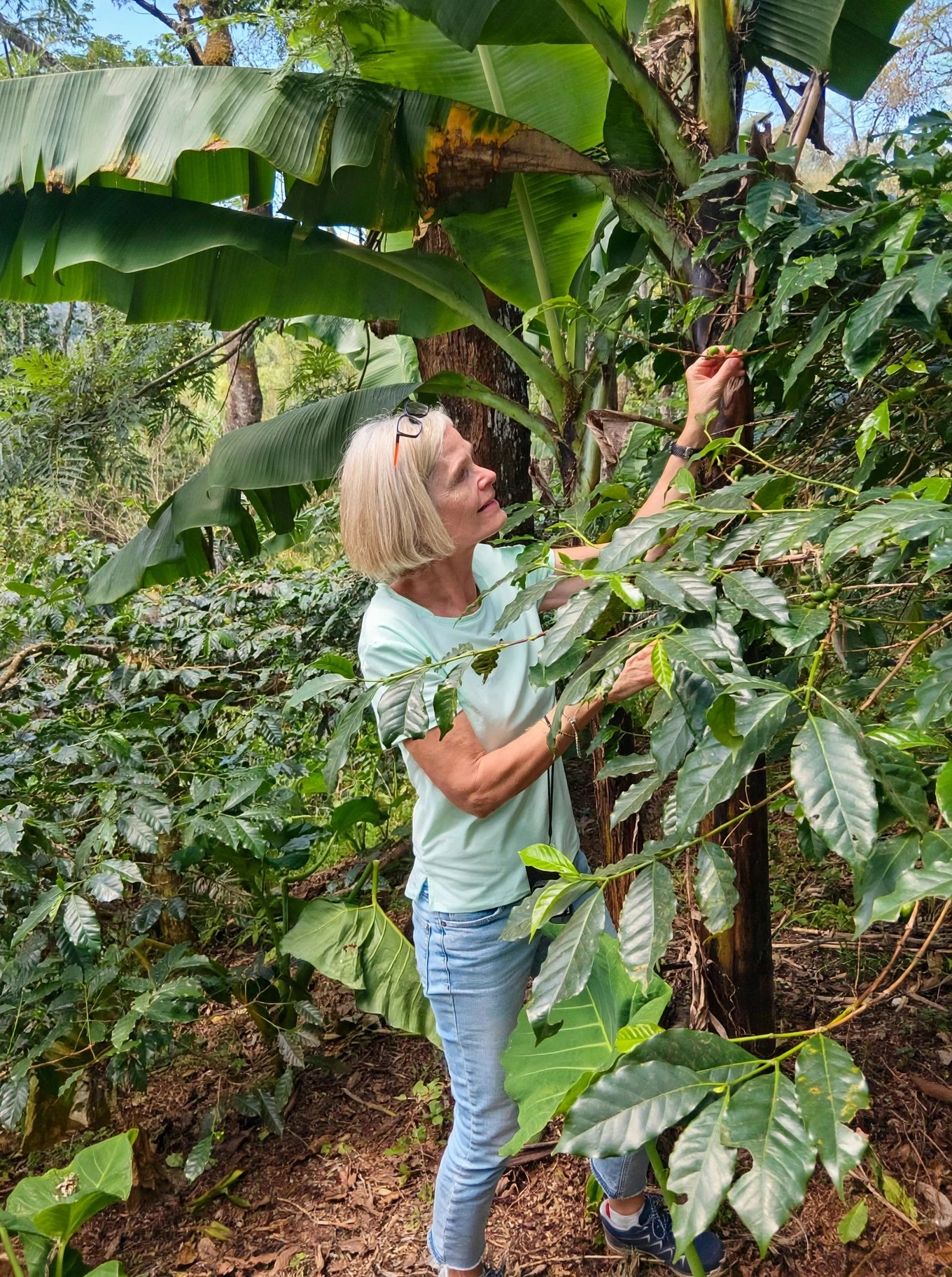
Coffee harvesting follows seasonal cycles, and the timing can vary with rainfall and local growing conditions. Where picking is taking place during your visit, your host can explain how ripe cherries are selected and harvested.
Step 2: Peeling and Sun-Drying
After harvesting, coffee cherries are processed to remove the fruit surrounding the beans. The method and equipment can vary between growers. Beans are then dried before further processing; your host can explain the method used by the household or producer you visit.
Step 3: Removing the Parchment (Hulling)
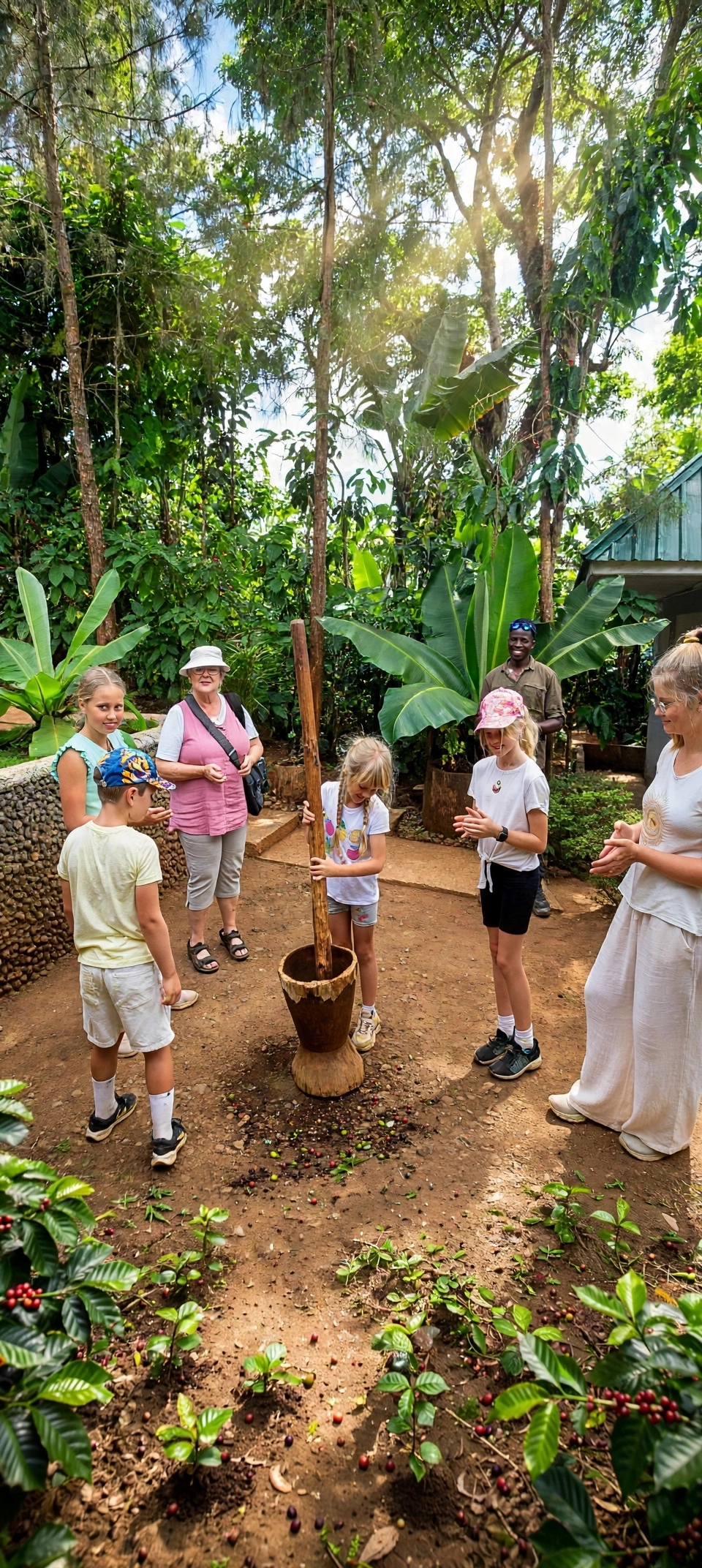
Some traditional demonstrations use a wooden mortar and pestle to loosen the dry outer layer from the beans. The local names and tools may vary. Your host can show you the method used in the demonstration and explain how the beans are separated.
Step 4: Woodfire Roasting in Clay or Iron Pots
During roasting, green coffee beans gradually change colour and release a distinctive aroma. In a traditional demonstration, beans may be roasted in a pan over a fire and stirred as they heat. The time and roast level depend on the quantity, heat and preferred taste.
Step 5: Pestle Grinding to the Beat of Chagga Songs
The roasted beans may then be ground using a mortar and pestle. Some demonstrations include songs or rhythmic participation while grinding. Your host will guide guests through the activity and explain the local meaning where relevant.
Step 6: Boiling and Pouring
The ground coffee is brewed using the method demonstrated by your host, then served for tasting. Notice the aroma and flavour for yourself; the final cup depends on the beans, roast, grind and brewing method.
Frequently Asked Questions
What type of coffee is grown in Materuni?
Materuni is part of the Kilimanjaro coffee-growing area. The varieties, growing conditions and flavour can differ between farms and harvests. During a visit, ask your host about the coffee grown locally and how the season affects the beans.
Why do Chagga hosts sing while grinding coffee?
In some local coffee-making demonstrations, singing and rhythm accompany the shared work of grinding. Ask your host about the song, its meaning and whether it is part of the demonstration on the day of your visit.
Can I buy freshly roasted coffee beans to take home?
Availability of locally grown coffee to take home can vary. Ask your host before your visit whether beans or ground coffee are available, what sizes are offered and the current price.
Discover traditional Chagga coffee in Materuni.
Take part in a hands-on introduction to traditional Chagga coffee making in Materuni. If you would also like to visit the waterfall, compare the available experiences and ask your host about the timing and arrangements.